
Buy on Amazon and support us at no extra cost
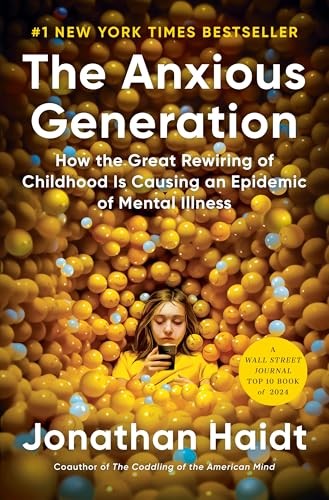
The Anxious Generation
AI Woke Analysis
Jonathan Haidt's "The Anxious Generation," published in 2024, meticulously documents the surge in adolescent mental illness—depression, anxiety, self-harm, and suicide—beginning around 2010 across developed nations, attributing it primarily to the "great rewiring" of childhood from play-based to smartphone- and social media-dominated experiences.12 Haidt argues that this shift, coupled with overprotective "safetyism" in the real world, has deprived children of essential antifragility built through unsupervised play, risk-taking, and peer conflict resolution, leading to emotional fragility rather than resilience.3 The book presents extensive data, including dramatic rises in girls' self-harm (nearly tripling from 2010-2020) and notes social contagion effects amplified by platforms, such as viral tics or spikes in gender dysphoria referrals among adolescent females—trends Haidt links directly to addictive algorithms prioritizing extreme content over healthy development.3
Far from embedding progressive political messaging or identity politics, the narrative critiques cultural practices that foster vulnerability, echoing Haidt's earlier work on "coddling" and concepts like safe spaces, trigger warnings, and censorship, which it portrays as counterproductive to building robust young minds.3 There are no overt pushes for diversity quotas, inclusion mandates, or social justice themes; instead, solutions emphasize phone-free schools, delayed social media access until 16, more recess with "risky play," and parental pledges for independence—practical reforms transcending ideology.1 Even Bill Gates' endorsement highlights the tech-parenting imbalance without ideological tint, focusing on empirical harms like sleep loss and social isolation.4
Critics from various angles, including left-leaning outlets, challenge the causation but do not identify woke elements within the text itself; some rebuttals even defend against Haidt's implied critique of overprotection by noting conservative book bans, underscoring the book's apolitical—or anti-fragility—core.2 Haidt, a self-described centrist liberal, prioritizes evidence-based storytelling on tech's societal toll over partisan signaling, rendering the work devoid of the defined woke hallmarks.
AI Quality Analysis
Jonathan Haidt's "The Anxious Generation" stands out as a masterclass in accessible non-fiction writing, blending rigorous research with a conversational tone that draws readers in effortlessly. The prose is clear and engaging, often described as layman's language enriched with vivid imagery, graphs, and succinct case studies that illuminate complex ideas without overwhelming the audience. Haidt's structure flows logically from historical context through evidence presentation to practical solutions, creating a narrative arc that feels purposeful and propulsive, even if some sections repeat for emphasis.12
The book's pacing strikes an effective balance, starting with foundational explanations that build steadily to more urgent calls to action, keeping engagement high through thought-provoking insights and relatable anecdotes. Reviewers frequently highlight its readability, noting how organized paragraphing and illustrative elements make dense topics feel dynamic and digestible, turning what could be dry analysis into a page-turner.1 This craftsmanship elevates the entertainment value, as readers report savoring the text for its compelling rhythm and ability to provoke reflection without fatigue.
In terms of originality, Haidt crafts a fresh framing around the "great rewiring" of childhood, using metaphorical language and visual aids to present data in innovative ways that stick with the reader long after finishing. Production values shine through in the polished integration of charts and examples, contributing to a professional, high-quality feel reminiscent of top-tier popular science works. While a minority of critiques point to occasional filler or anecdotal emphasis disrupting flow, these are minor compared to the overwhelming acclaim for its persuasive style and structural coherence.2
Ultimately, the book's craftsmanship delivers exceptional entertainment through intellectual stimulation and seamless storytelling, earning its status as a bestseller with average ratings hovering around 4.4 out of 5 across tens of thousands of reviews. It exemplifies how expert writing can transform scholarly material into an urgent, captivating read.
Sources
Sign in to rate, review, or report this content.
User Reviews
Loading reviews...
No ratings yet. Be the first to rate this media!
No keywords added yet