
Buy on Amazon and support us at no extra cost
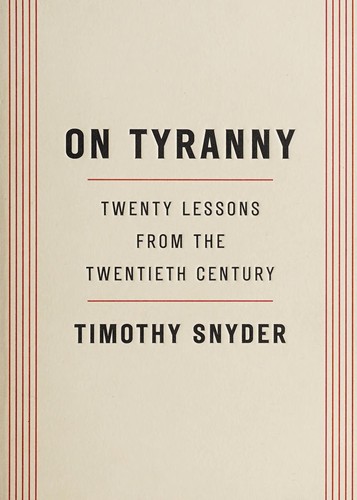
On Tyranny
Description
Most of the power of authoritarianism is freely given.
AI Woke Analysis
Timothy Snyder's 2017 book "On Tyranny: Twenty Lessons from the Twentieth Century" presents a compact manifesto of resistance against authoritarianism, drawing primarily from the rise of Nazi Germany, Soviet regimes, and other 20th-century dictatorships to offer practical imperatives for safeguarding democracy.12 Structured as 20 short lessons—such as "Do not obey in advance," "Defend institutions," "Believe in truth," and "Be as courageous as you can"—the text urges readers to reject anticipatory compliance, uphold professional ethics, fact-check propaganda, engage in street protests, and prioritize patriotism over nationalism.1 Written in the wake of Donald Trump's election, it explicitly critiques his rhetoric, such as contradictory policy promises and admiration for figures like Vladimir Putin, framing these as harbingers of tyranny akin to historical fascists.1
While the book prioritizes urgent political messaging over nuanced historical storytelling, using European atrocities as cautionary analogies for contemporary America, it largely avoids the hallmarks of "woke" content. There are no overt social justice campaigns, identity politics centered on race or gender, or mandates for diversity and inclusion that eclipse the core narrative of civic vigilance.2 One lesson touches on rejecting hate symbols and framing outgroups as threats, evoking a mild "us vs. them" awareness, but this serves anti-authoritarian ethics rather than progressive grievance politics.1 The focus remains on universal principles like truth, institutions, and personal courage, with history subordinated to actionable advice against any power consolidation, whether through gerrymandering, paramilitaries, or "dangerous words" like "emergency."2
Snyder's liberal bias emerges in its partisan undertones, portraying Trump-era dynamics as a slide toward fascism while overlooking potential authoritarian risks from other quarters, a point critics decry as hysterical left-leaning alarmism disguised as timeless wisdom.4 Yet this progressive political slant—defending Enlightenment values against populism—does not devolve into identity-driven rhetoric or DEI prioritization. The result is a historically informed call to arms that rates low on woke intensity, appealing more to classical liberals than cultural revolutionaries.
AI Quality Analysis
On Tyranny stands out for its exceptional craftsmanship in a compact format, structured as twenty concise lessons that deliver a brisk, purposeful pacing ideal for quick consumption. Each chapter functions like a self-contained vignette, building momentum through short, punchy segments that maintain reader engagement without unnecessary elaboration, making it a model of efficient non-fiction design.13 The writing quality shines in its lucid, measured prose—clear, quotable, and beautifully weighted—distilling complex ideas into accessible language that flows with deceptive simplicity, earning widespread acclaim for readability and tactile appeal in its pocket-sized production.235
While the slim 128-page length enhances its entertainment value as an easy, one-sitting read that feels urgent and portable, it occasionally sacrifices depth for brevity, resulting in chapters that some find underdeveloped or rushed.14 Nonetheless, this restraint contributes to its originality: a manifesto-like pamphlet reviving the tradition of distributable guides, complete with crisp production values that invite gifting or public placement, blending historical insight with practical rhythm in a fresh, modern package.5 High average ratings—4.29 on Goodreads from over 15,000 reviews and 4.7 on Amazon from 35,000—reflect sustained appreciation for these qualities, even in recent 2025-2026 feedback praising its structure and prose.12
Overall, Snyder's handiwork delivers strong entertainment through its motivational cadence and innovative format, prioritizing impact over sprawl, though it stops short of masterpiece depth due to its intentional terseness.
Sign in to rate, review, or report this content.
User Reviews
Loading reviews...
No ratings yet. Be the first to rate this media!
No keywords added yet